Sunday, May 27, 2012

Photos from Comicpalooza 2012

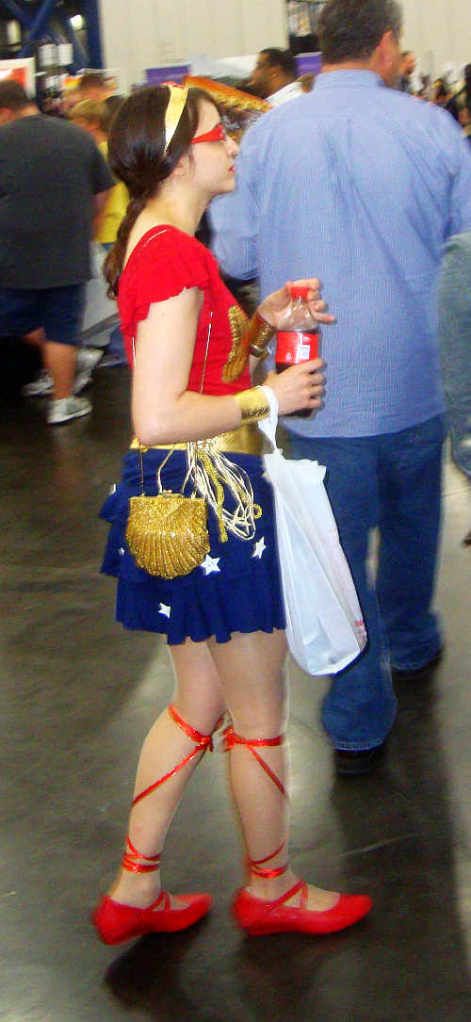
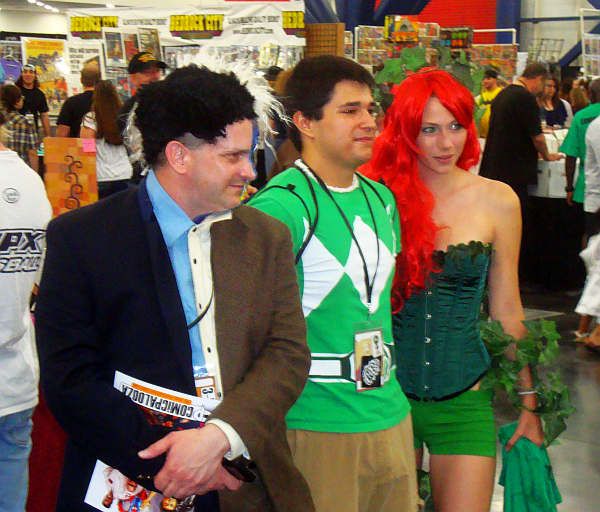
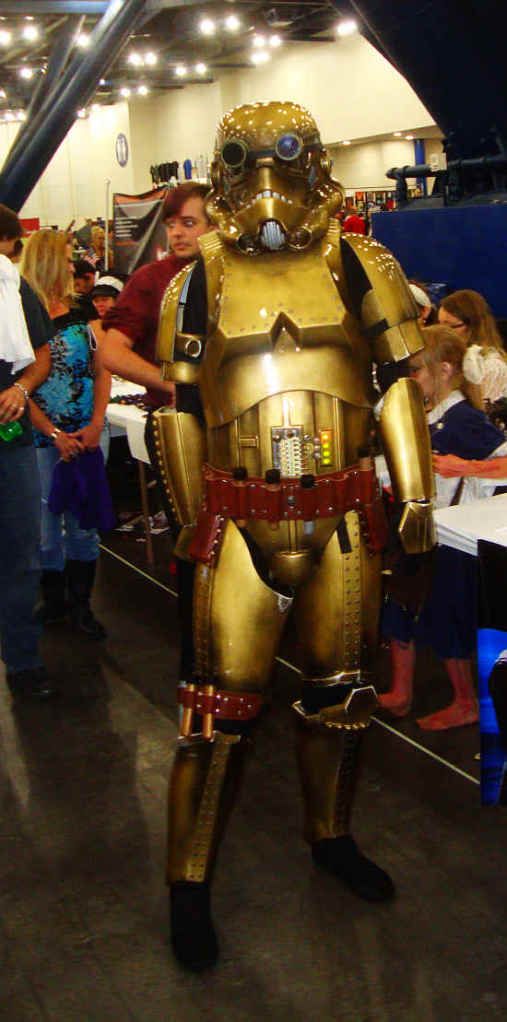
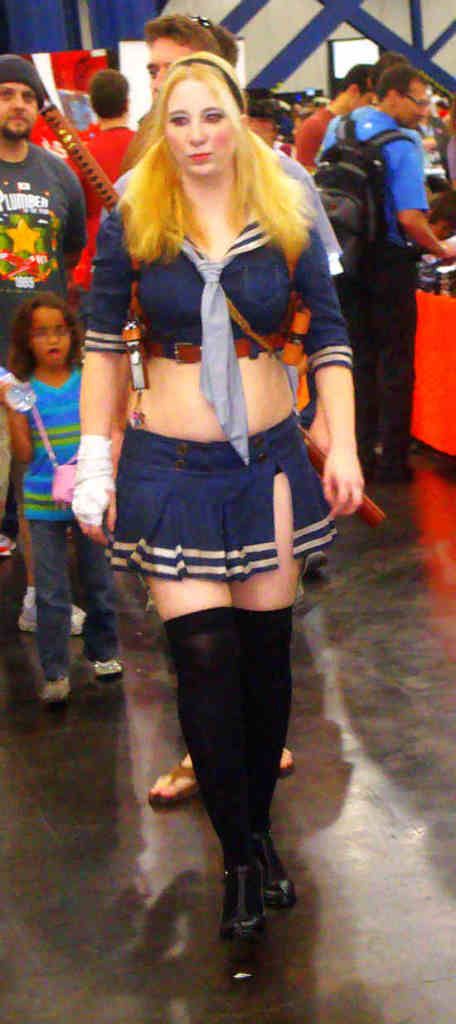
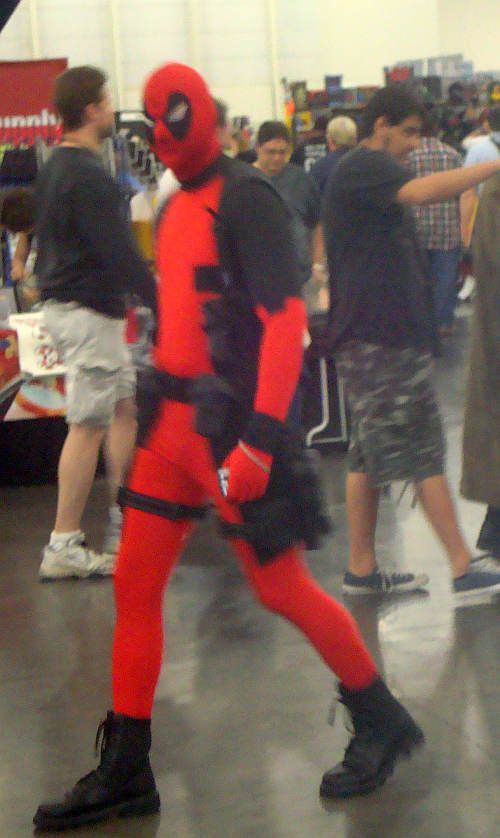
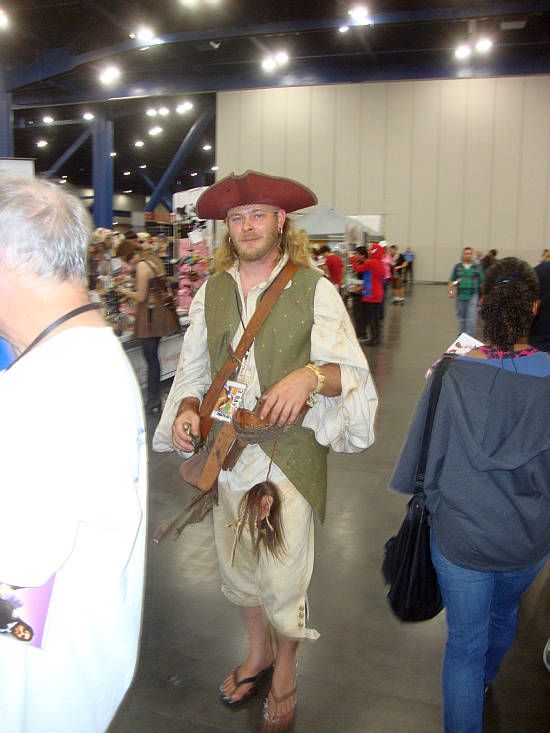
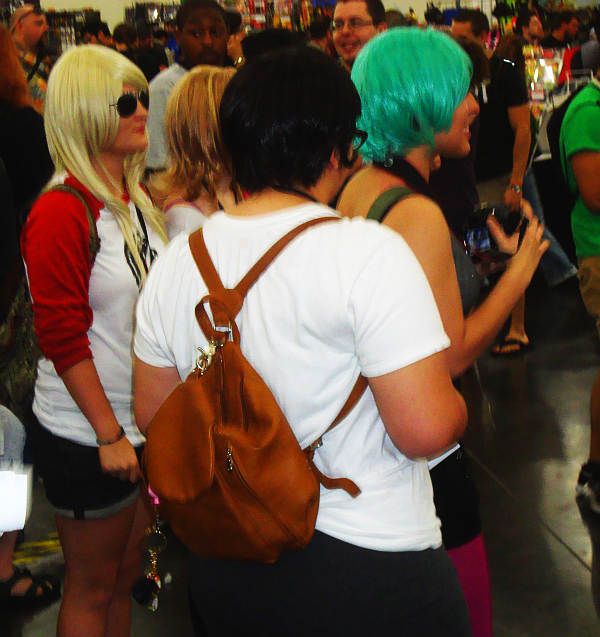
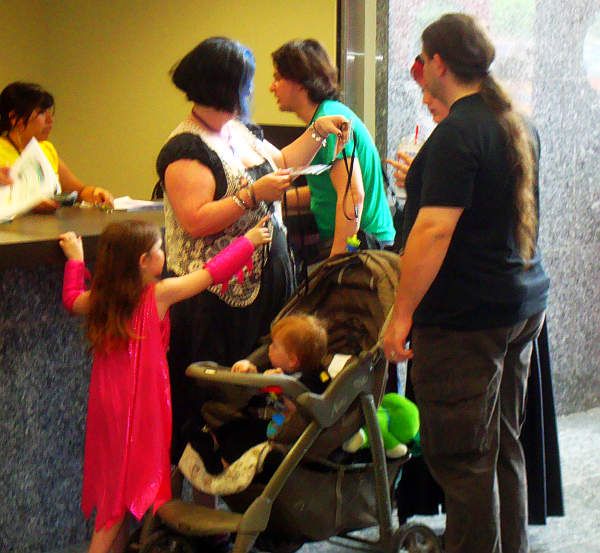
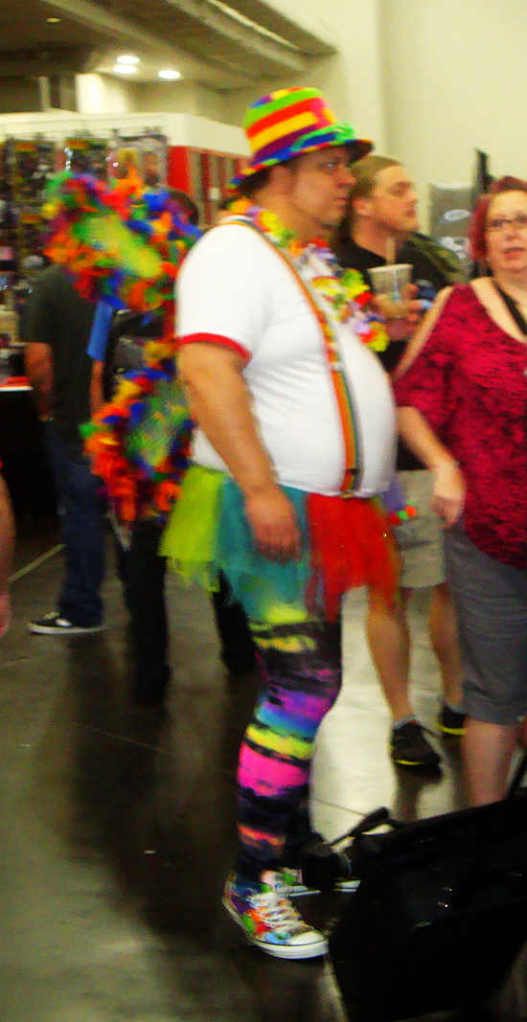
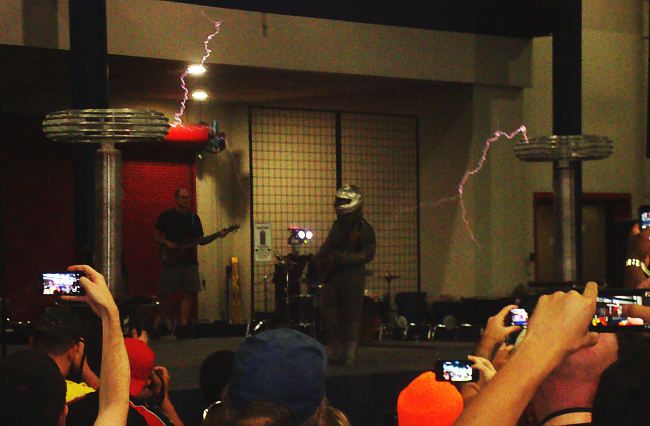
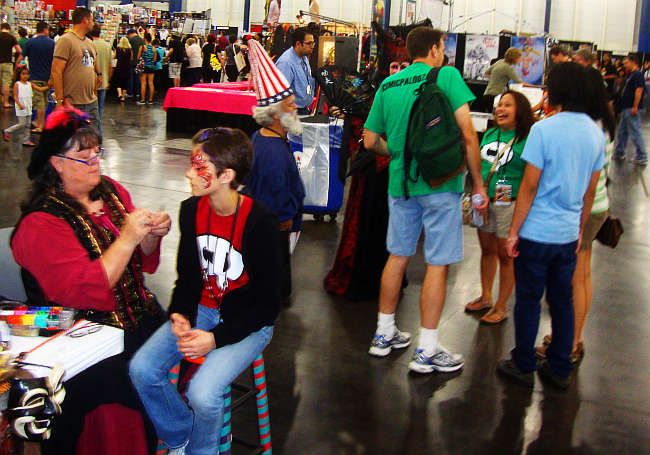
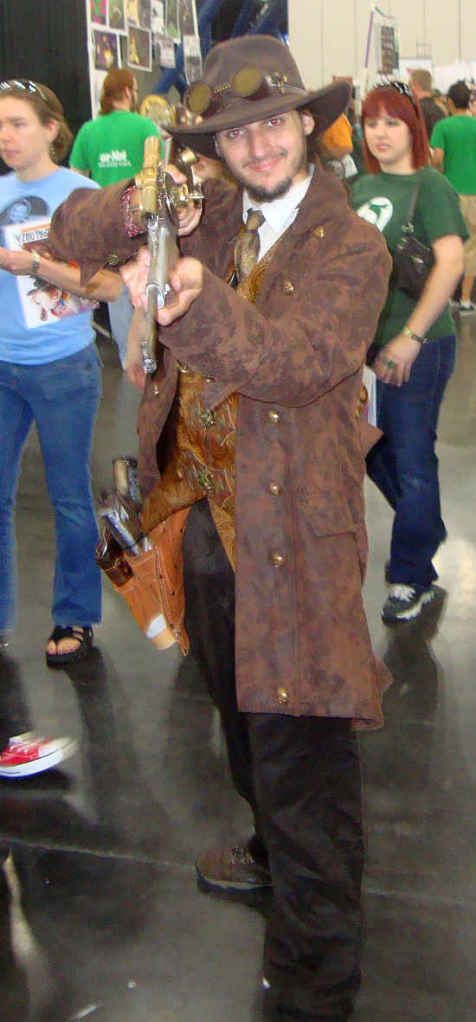
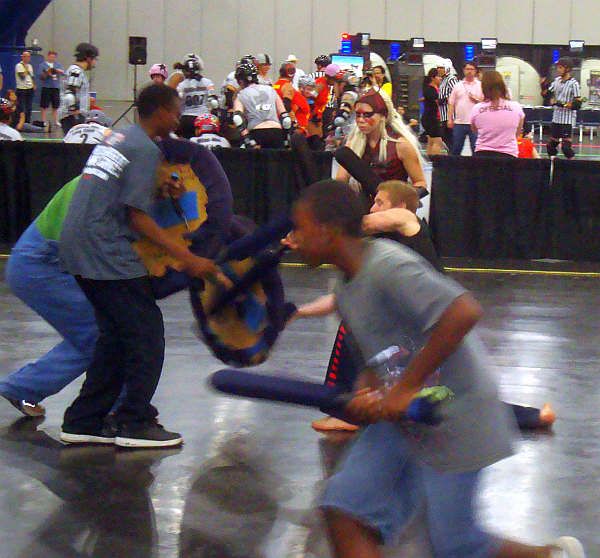
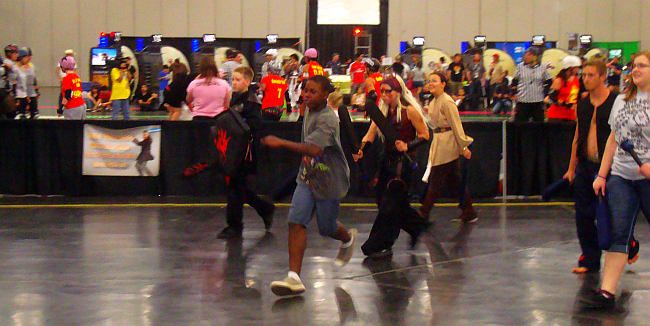
I checked out Comicpalooza 2012 on Sunday. It looked like a success--lots of people there, having fun, totally engaged. It's not really my thing. The presence of alternative comics (much less art comics, to split hairs more finely) was almost nil, and comics-wise, that's what I'm interested in. That said, there were a lot of creative people there, both guests and attendees. I like people who wear costumes, as you can see.

Comicpalooza 2012

Comicpalooza 2012

Comicpalooza 2012

Comicpalooza 2012

Comicpalooza 2012

Comicpalooza 2012

Comicpalooza 2012

Comicpalooza 2012
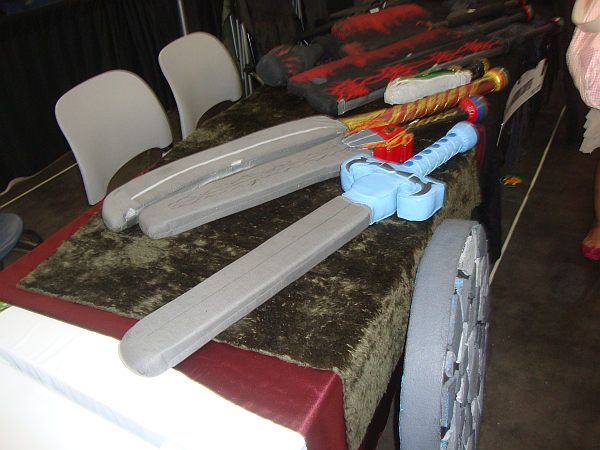
Nerf swords!

Comicpalooza 2012


Comicpalooza 2012

Comicpalooza 2012

Comicpalooza 2012

Comicpalooza 2012
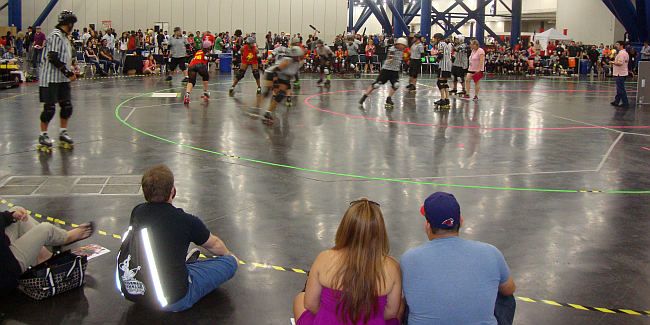
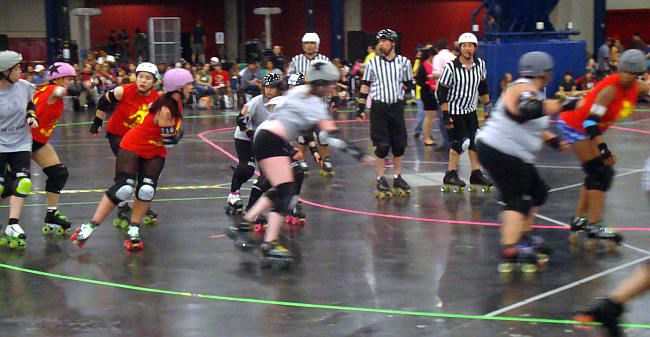
Whoever had the idea to include roller derby at Comicpalooza is a genius.

Comicpalooza 2012

Comicpalooza 2012

Comicpalooza 2012

Comicpalooza 2012

Comicpalooza 2012
Combat!

Comicpalooza 2012


Share


Labels: , ,

Wednesday, September 23, 2009

Permutter $65 million, Kirby $0?

http://cache.gawker.com/assets/images/8/2009/09/500x_kirbymarvel.jpg

Two semi-unrelated items. First, as everyone interested in comics knows by now, Jack Kirby's heirs are asserting their rights to the characters that Jack Kirby had a major hand in creating.
The heirs to Kirby, who co-created the Fantastic Four, the X-Men, the Avengers, Iron Man, Hulk, Thor and Captain America - and had a hand in creating Spider-Man, pretty much completing the set - have sent out 45 notices of copyright termination to companies including Marvel Entertainment, Disney, Paramount (distributors for Iron Man, Hulk and the next five Marvel movies), Sony (the studio behind the Spider-Man movies, 20th Century Fox (X-Men and Fantastic Four) and others, expressing intent to own copyright on Kirby's creations. The notices did not only involve comic books and movies; apparently, Hasbro and Universal also received notices, for the toy and theme park rights as well.
The Kirby estate is taking the claim seriously, hiring Marc Toberoff, the attorney who's been representing the Siegel estate in the recent Superman/Superboy lawsuits. While Marvel itself has offered no comment on the notices yet, Disney issued a statement saying, essentially, that it's not a big deal:
The notices involved are an attempt to terminate rights seven to 10 years from now, and involve claims that were fully considered in the acquisition.
(Graeme McMillan, Io9, September 21, 2009)
Likewise, all fanboys know about the Disney deal mentioned above to purchase Marvel. Yesterday Disney filed an S-4 (a form filed with the SEC by a publicly traded company disclosing any material information about a merger or acquisition).
There was also some interesting details deeper into the proxy – the part that spells out what various executives get post-deal. A quick tally for Perlmutter shows that it will add up to around $65 million, including $34 million in options that were just granted this past March. Those options were granted at around $25 a share and vest immediately and the takeout price is $50, which seems like some pretty good timing. (Michelle Leder, Footnoted.org, September 23, 2009)
Now I am not going to try to get into legal arguments, because I am totally incompetent to do so, and don't know the details of the Kirby situation. But just on the face of it, it is hard to see why Perlmutter deserves $65 million and Jack Kirby (and since Jack is dead, his family) deserve nothing. But the point of view that the Kirby heirs deserve nothing is expressed widely (in the comments of the Io9 article and on other comics message boards). Astonishing!

Labels: , ,

Saturday, August 15, 2009

Dream Girl

I just finished reading The Art of Harvey Kurtzman. It's beautiful, and I recommend it highly. But I don't want to talk about Harvey Kurtzman, but rather this photograph.

Adele Kurtzman

That is Adele Kurtzman, Harvey's wife, from 1948.

I am in love.

Labels: ,

Wednesday, July 22, 2009

Old Comic Books

When I first started looking around at comics in the ’80s to educate myself on the history of the comic book, I thought there would be a lot of funny old comics out there, and there really aren’t. The truth is, there are almost no good old comic books out there. Those old comics turned out to be exactly as you’d expect: cheap junk produced quickly to sell to children. (Seth in an A.V. Club interview)
I'm astonished that comics fans consider the 30s, 40s, and 50s to be the "Golden Age." Comics then were almost all terrible. Individual old comics occasionally contain an interesting semi-redeeming feature that stands out because the rest of the comic is so awful. Really good cartoonists in those days did comic strips, not comic books. Of course there are a few exceptions, but for me personally, the "golden age" of comics is now--the age of Asterios Polyp and Black Hole and George Sprott: 1894-1975, etc., etc.

[sprott.jpg]
page from George Sprott by Seth

Labels:

Tuesday, July 14, 2009

Asterios Polyp

http://forbiddenplanet.co.uk/blog/wp-content/uploads/2009/05/Asterios%20Polyp.jpg

David Mazzucchelli has always been an artist with more potential than achievement. He demonstrated early in his career that he could effortlessly do great "realistic" cartooning of the Caniff/Sickles school (a school I define as being represented by artists like Alex Toth, Jordi Bernet, early Alberto Breccia, Enrique Breccia, Frank Robbins, and at a certain extreme, Jose Munoz and Blutch). For some artists, that would have been enough. But Mazzucchelli had greater artistic ambitions. His drawing morphed into a kind of non-realistic expressionism that drew from Gary Panter, Julie Doucet and others (while not going quite as far as those artists) while still honoring the chiarascuro of Caniff and Sickles. He wrote his own stories, which mainly appeared in his own magazine, Rubber Blanket, and which were not bad but not brilliant. Working with Paul Karasik, he created an adaptation of Paul Auster's novel City of Glass. This adaptation was universally well-received, and the drawing was fantastic. But the brilliance of the layout was mostly due to Karasik's input. In a sense, Mazzucchelli was just a brilliant pair of "hands". At this point, no one knew if David Mazzucchelli had reached his peak or if all that Rubber Blanket work was prelude to something greater.

His last solo stories were published in 2001. It was known that Mazzucchelli was teaching, and occasional illustrations popped up in The New Yorker, but to me it seemed that Mazzucchelli had become the most prominent example of a great cartoonist who basically quite the medium. (This is all-too-common in alternative comics, which is historically less renumerative and far less respected than even poetry. And we know how poor poets are. The list of excellent alternative cartoonists who basically have left the field include Michael Dougan, Julie Doucet, Dave Cooper, etc.)

All this is a build-up to what, for me, is the biggest surprise of the year--David Mazzucchelli's first graphic novel, Asterios Polyp. It truly fulfills the promise that comics readers have seen in Mazzucchelli all these years.

His art has always been about synthesizing traditions, and shockingly, what he does here is to chuck the Caniff/Sickles tradition. Sort of. Caniff and Sickles themselves seem to have been influenced by the chiarascuro of Chester Gould. Gould himself though was a true original. The heavy blacks in Dick Tracy were part of the mood of the strip, but the essential quality of his drawing was in the clean line and stylized, reapeatable forms--particularly faces and figures. The only thing like it are the traditional face cards in a standard deck of cards.

So we get characters here like Asterios Polyp who are always drawn in profile. Indeed, each character, drawn with a precise (but not mechanical) line, has his or her own stylized position. Willy Ilium is almost always drawn from the same three-quarters view. The settings are likewise clean and architectural. Even the organic sculptures of Polyp's wife, Hana, are portrayed as very clean. (Ironically, because she is supposed to be someone who uses discarded material to make her sculptures. But her work more resembles James Surls than Robert Rauschenberg or Ed Kienholz.)

But his drawing changes depending on what is being portrayed. The color schemes change according to setting. In Polyp's mind, people are drawn different ways refelcting their dfferent personas. In an Orpheus-inspired fantasy sequence, he returns to a kind of Rubber Blanket-style chiaroscuro.

Now all this would be irrelevent if the story wasn't fantastic. The story is split into two alternating parts--one tells the story of Polyp's life from the beginning through his marriage to Hana to the end of that marriage. The other takes us from the aftermath of the divorce, where Polyp seems to suffer a nervous breakdown, is burned out of his apartment, and hits the road, resettling in a small town and taking a job as a car mechanic. These two strands alternate, and the Polyp in the first strand is arrogant, charming, and successful.

But his arrogance fails him when Ilium hires Hana to design his new ballet version of Orpheus. Ilium is constantly making rude sexist double-entendres towards Hana, but because Ilium and Hana are artistic partners, Polyp keeps quiet. He suspects maybe something is going on. But the reality is that Ilium is a bully, and Hana has been looking for Polyp to step up and defend her. His misreading of the situation and his inaction is one of the causes of the divorce.

This misreading is kind of a shocker, because Polyp is smart and successful. An architecture professor (he is a 'paper architect'--none of his designs were ever built. Zaha Hadid was perhaps the most famous living "paper architect" until the Rosenthal Contemporary Art Center was built in 2003.) He is a great professor and knows a whole lot about everything. This is not always an attractive quality, but it helps him make conversation in any situation.

The thing about Polyp is that he is a highly dualist thinker. Apollonian-Dionysian, form-line, etc. He's not naive about it--he realizes that dualism is an organizing principle, a hermeneutics, not reality. In addition to being about the arc of his relationship with Hana, the book is about the source of this dualism and its eventual collapse.

I really related to Polyp. Even to the point of having a particular hermeneutics. Probably a ridiculous thing to admit. But that probably made the experience of reading Asterios Polyp even better for me. I liked Polyp and I was rooting for him. Other readers might think he's kind of an asshole.

Asterios Polyp is a great achievement. It really confirms my faith in Mazzucchelli as an artist.

Labels: ,

Monday, July 06, 2009

Legione de Tintin

http://farm3.static.flickr.com/2518/3691890217_a46d781c81_b.jpg
Il Capo Squadra Balilla (cover for Fascist youth handbook), by Zeda, 1935 Italy

This image is from Italian Art Deco: Graphic Design Between the Wars edited by Steven Heller and Louise Fili. Hat tip to Journey Around My Skull.


Labels: , ,

Saturday, July 04, 2009

Dr. Seuss vs. Hitler

http://orpheus.ucsd.edu/speccoll/dspolitic/pm/10602cs.jpg

The Holocaust Museum has a display of Dr. Seuss political cartoons which isn't very good--it doesn't have an originals, and doesn't even really show all that many of the cartoons he drew for P.M. (That said, a concurrent exhibition, A One-Man Army: The Art of Arthur Szyk is well-worth seeing. It has both originals and printed copies of the Szyk's work, so you can see the context for the pieces.)

But thanks to Radosh.net, I've found a place where online where you can see all of Seuss's political cartoons.

http://orpheus.ucsd.edu/speccoll/dspolitic/pm/10704acs.jpg

The anti-Lindbergh cartoons are vicious! We tend to forget this unsavory aspect of the aviation pioneer these days.

http://orpheus.ucsd.edu/speccoll/dspolitic/pm/10714cs.jpg

Heh--this reminds me of many kneejerk reactions to Obama.

http://orpheus.ucsd.edu/speccoll/dspolitic/pm/10918cs.jpg

More on Lindbergh.

http://orpheus.ucsd.edu/speccoll/dspolitic/pm/11212cs.jpg

After the Japanese attacked, Seuss's battles with the isolationists, America-firsters, and Lindbergh abruptly end. Those people are history and the job now is to keep America fighting.

http://orpheus.ucsd.edu/speccoll/dspolitic/pm/11230cs.jpg

http://orpheus.ucsd.edu/speccoll/dspolitic/pm/1942/20202cs.jpg

http://orpheus.ucsd.edu/speccoll/dspolitic/pm/1942/20213cs.jpg

Sadly, Seuss swallowed the lie that Japanese Americans were potential traitors--thinking that lead directly to concentration camps for a people based solely on their national ancestry.

http://orpheus.ucsd.edu/speccoll/dspolitic/pm/1942/20223cs.jpg

Seuss was aware that the rest of the world was depending on the U.S.--it wasn't just about us.

http://orpheus.ucsd.edu/speccoll/dspolitic/pm/1942/20321cs.jpg

Hey, this looks familiar!

http://orpheus.ucsd.edu/speccoll/dspolitic/pm/1942/20407cs.jpg

About half of Seuss's cartoons were aimed at getting Americans at home to act in ways that supported Americans fighting abroad.

http://orpheus.ucsd.edu/speccoll/dspolitic/pm/1942/20515cs.jpg
This is as stirring a defense of freedom of speech as any I've seen!

http://orpheus.ucsd.edu/speccoll/dspolitic/pm/1942/20602cs.jpg

http://orpheus.ucsd.edu/speccoll/dspolitic/pm/1942/21002cs.jpg

Seuss was also a bit of a scold.

http://orpheus.ucsd.edu/speccoll/dspolitic/pm/1942/20610cs.jpg

But he was capable of celebrating when things went right (for a change).

http://orpheus.ucsd.edu/speccoll/dspolitic/pm/1942/20630cs.jpg

He did several cartoons opposing Jim Crow hiring practices in war industries.

http://orpheus.ucsd.edu/speccoll/dspolitic/pm/1942/21001cs.jpg

Happy Independence Day!

Labels: ,

Wednesday, July 01, 2009

Little Orphan Annie vol. 3: 1929-1931

http://store.idwpublishing.com/images/LOA%203.jpg
Little Orphan Annie volume 3: And a Blind Man Shall Lead Them by Harold Gray. As Jeet Heer writes in the introduction, the Great Depression really inspires the best storytelling from Harold Gray. This volume is set in the early, worst years of the Depression, and while Gray is an optimistic guy by nature, he doesn't shrink from portraying the harsh conditions Americans found themselves in. Heer points out a panel from December 13, 1930:

Little Orphan Annie Depression Scene

Heer calls this image "shocking," and certainly it's not what we think about when we think of America, nor what we imagine when we think of comic strips. Gray in this volume is continuously juggling two contradictory thoughts--first, and atypical for him, is that people are in hard, desperate situations not because they are failures, but because there aren't enough jobs, and what jobs there are are terrible. Second, by pulling together, but mostly by pluck, hard work, and common decency, folks in dire straits can overcome this situation. I don't blame Gray having (and fictionalizing) these opinions--you almost have to hold them both to hope to get through a depression.

The best example of the two points of view is shown in the fall and rise of Daddy Warbucks. This is my favorite Little Orphan Annie sequence. Warbucks' enterprises, like so many in the Depression, go bankrupt. Warbucks and Annie are knocked back to the bottom of the working class, living in a tenement, Warbucks unemployed and desperate for work. He first looks for a job as a business executive, but soon has to lower his sights to the very bottom. It's hard for him to find work, and what work he finds is temporary. He gets taken by dishonest employment brokers. He, like so many of the working class, finds himself utterly helpless, lacking any ability to change his situation. The last straw is when he is working as a truck-driver. He swerves to avoid a child, hits an El pylon, and is blinded in the crash. In the hospital, he finds his employer has disclaimed all responsibility--going so far as to claim that Warbucks was never an employee in the first place. (Of course, Annie is thriving in her tenement, as usual. She blossoms in poverty.)

A few plot twists later, Warbucks has his pluck restored. Partnering with a midget (!) named Flophouse Bill, he quickly regains his fortune. (In typical Warbucks fashion, he avoids contacting Annie, although he does keep tabs on her.) He learns that the man who ruined him before is a competing financier/industrialist named J.J. Shark. Just as Warbucks and Bill have reached a minor level of success, we learn of Shark's latest nefarious plan.

JJ Shark schemes

This was a common practice during the 1920s. It was called a "stock pool," and involved wealthy individuals, like Shark and his compatriots, pooling their money to manipulate a specific stock. In this case, the stock pool was a "bear raid," designed to drive a stock down so that the raiders could pick it up cheap. This was perfectly legal in 1931 when Shark formed his pool. It became illegal with the Securities Act of 1933. But even before 1933, most people recognized that there was something basically unfair and immoral about rich insiders profiting off of small investors through such schemes.

But Warbucks is not just any small investor. When the bear raid begins, he smells Shark's hand behind it. While Bill urges him to sell, he holds out and buys near the bottom before Shark and his fellow pool members can. In this way, he is able to take over Shark's business. (Ironically, in order to do this, he has to participate in fleecing the other small investors, who were fooled into selling their stock.)

Of course, Little Orphan Annie is still a fairy tale. So not only does Warbucks go from an penniless blind man to being a billionaire in three months, but he gets his eyesight back in an experimental operation!

I look forward to seeing how Gray deals with the Depression as recovery continues to be slow and the government picks up the slack through various work programs. Gray is known to be a conservative Republican, and one who got more conservative as time went on. But even though he is politically conservative, in this and previous volumes, he shows great sympathy for workers, small shopkeepers, farmers, and other people who are vulnerable to economic forces over which they have no control.

Labels: , ,

Sunday, June 21, 2009

Art + Art

Photobucket

Nice, huh. A beautiful Pogo daily from 1951 by Walt Kelly. Despite all that fine brushwork, Kelly worked pretty small--that original is only 17.5" x 6" with the strip itself 16.5" x 4.75".

But check this out:

Photobucket

If you look closely, you can see Kelly's underdrawing. He uses blue pencil which would disappear in the photographic process for making the strip print-ready. His blue pencil drawing is very tight, except (curiously) on the lettering and (less curiously) on Porky Pine. But what is amazing is not his pencils but his inks. Not a single correction on the page. What an amazingly skilled brush-handler he was! It's freaky that a guy who was such a brilliant writer and satirist should also be such a skilled artist--but that combination describes many (but not all) of the greatest cartoonists, of whom Kelly is one of the very top ever.

Photobucket

This photograph is "Untitled from Rabbits in the Land of Squirrels" by Elaine Bradford. If you are from Houston, you might have seen her recent show at the Art League called the Museum of Unnatural History. This show was half Museum of Jurassic Technology and half knitting. I understand a fake museum--museums are so central to art in our day that basic postmodern theory practically demands that artists create pastiches and parodies of museums. You see it in David Wilson's and Hans Haacke's work, among others. It's a form of conceptual art, but it involves a lot of precise craft.

Likewise knitting. Knitting is kind of a new thing in art. I don't know what it means. Maybe Bradford can enlighten us a little with some words from her own website.
Through crocheting sweaters for inanimate objects, she references connotations associated with the handmade, and personal ideas of comfort and warmth. These ideas about the process of crocheting are juxtaposed with the absurdity of its application. She has covered a variety of items in handmade sweaters, including trees, vacuum cleaners, and groceries. Her most recent work involves crocheting sweaters for taxidermied animals.
So OK. I thought it may refer to early feminist artwork that often used traditionally female artforms (like sewing) and wrenched it into the man's man's man's world of contemporary fine art.

This was one of the pieces for sale for either $50 or $100 at the Apama Mackey Gallery. This was a one-day show called the "The AMG Visual Stimulus Package" that was co-sponsored by Houston video site, Keep Houston Rich.

Anyway, I bought these two pieces of art, adding them to my "collection," such as it is.

Labels: , ,

Sunday, June 07, 2009

The Bungle Family

A few months back I bought some Bungle Family strips from eBay. Since then, I've been trying without luck to identify them.

Photobucket

This one appears to be from the 1930s. Initially I thought I'd check microfilm of New York newspapers. I started off at the Rice University library and the Houston Public Library. No luck there--both had paltry collections of newspapers on microfilm. I looked in the Houston papers (which they had fairly complete collections of), but none of them seemed to carry The Bungle Family from the relevant period.

Photobucket

This one (and all the subsequent ones) is from the 40s. Now what is interesting here is that in the 1940s strips I have, the originals are extremely large. There is no fine linework on them (as there is on the strip from the 30s)--all the halftones are some kind of letratone-style screen as opposed to hand-drawn hatching.

Photobucket

My theory (based on nothing, really) is that the creator of The Bungle Family, Harry Tuthill was getting older and his eyesight was getting bad. Tuthill was born in 1886 and had been drawing the strip since 1918. He may have used an assistant for the halftones. In any case, he seems to have drastically changed his approach to drawing the strip for some reason. And the strip ended in 1945.

Photobucket

So yesterday I went to the University of Houston library because they have a complete run of the Dallas Morning News on microfilm. I had been told that The Bungle Family ran in the Dallas Morning News, but it wasn't in any of the papers I looked up. Perhaps The Dallas Morning News dropped it before the late 1930s. And like Rice and the Houston Public Library, UH did not have any long runs of other cities' newspapers (except, annoyingly, the New York Times and The Wall Street Journal--two newspapers without comics!).

Photobucket

So I throw it out to you, my readers. What I really want to do is find out what precise years these strips ran (Tuthill puts the day and month, but frustratingly leaves off the year), what papers carried The Bungle Family in the 1940s, and what these storylines were about. Any help would be appreciated!

Labels: